
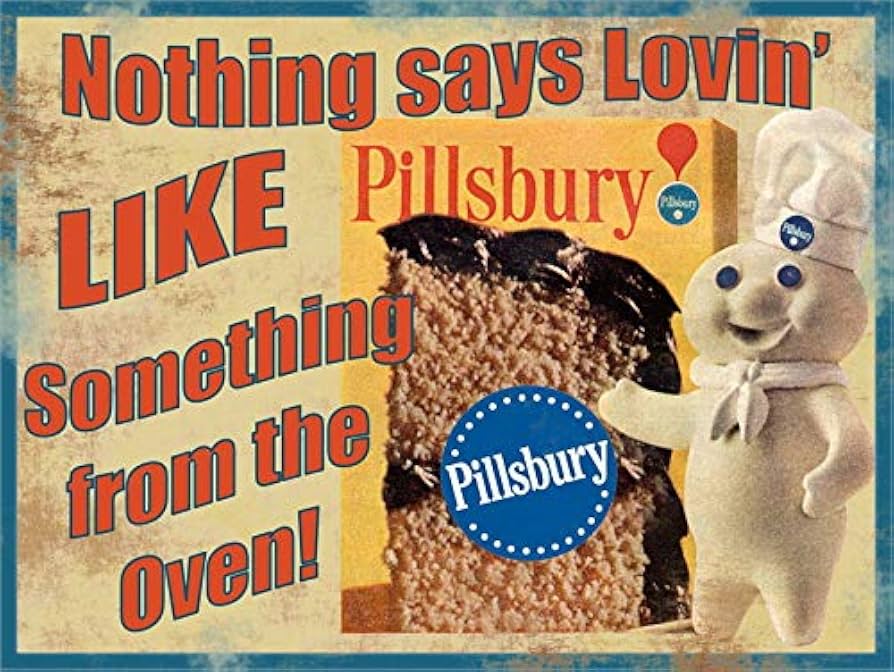
Pillsbury Doughboy
https://funkyjunkauctions.ca/canadian-trivia/Funky Junk Gazette
The History of The Pillsbury Doughboy
The history of the Pillsbury Doughboy, better known by his full name Poppin’ Fresh, spans more than six decades of advertising history.
He was created in 1965 by copywriter Rudy Perz at Leo Burnett, who reportedly got the idea from the familiar pop of refrigerated dough packaging.
Disney illustrator Milt Schaffer helped shape the character’s final look, and animator Jim Danforth with Cascade Studios helped bring the mascot to life for television.
The first commercials used stop-motion animation rather than computer graphics, with multiple bodies and interchangeable heads built so the mascot could show different poses and expressions.
Paul Frees supplied the original voice, and the first commercial introduced the now-famous belly poke and giggle.
That soft laugh quickly became one of the most recognizable sound cues in food advertising, and within just a few years the mascot had become widely recognized across the United States.

During the 1970s, Pillsbury expanded the Doughboy into a full family of characters.
Poppie Fresh was introduced as his wife, and other family members included Granmommer, Granpopper, Uncle Rollie, Popper, and Bun-Bun.
The family lineup also included Flapjack the dog and Biscuit the cat, helping Pillsbury build a broader advertising world around the mascot.
The family characters were also used in merchandise and promotional tie-ins, and vinyl doll sets became especially popular with children at the time.
Playsets, carrying cases, puppets, and character figures were produced in the 1970s, and today many of those vintage collectibles are sought by advertising collectors and toy buyers.
Complete sets and clean-condition dolls can attract strong interest in the secondary market.

By the 1980s, the Doughboy appeared in more energetic and varied campaigns.
Commercials showed him in settings beyond the kitchen, and he sang, danced, and took part in comedic skits.
This helped keep the character current as advertising styles changed.
A major technical change came in 1992 when Pillsbury moved from stop-motion to CGI.
Computer animation allowed smoother movement and more flexible performances, yet the company kept the familiar white dough body, chef’s hat, and friendly expression.
That continuity helped the mascot remain recognizable across generations.

In the 2000s and beyond, Poppin’ Fresh remained a durable pop-culture figure.
He appeared in crossover advertising and continued to be referenced outside Pillsbury’s own product lines, which is part of why collectors continue to save old packaging, display items, dolls, and promotional pieces tied to the brand.
Another notable change came with the 2024 refresh of the mascot.
The updated version gave him a blue neckerchief, a slimmer figure, and longer legs, while keeping his core identity intact and making the silhouette look more contemporary.
It was a careful rebrand rather than a full reinvention.

For vintage collectors, the Doughboy remains important because he crosses several categories at once.
He is an advertising mascot, a character toy, and a grocery brand icon.
He is also part of a larger history of twentieth-century American packaging and television marketing.

Keep the Treasure Hunt Going
Enjoyed the story? Browse our Current Inventory , check out our Online Auctions, explore more curious finds in Canadian Trivia, or dig into Patent Number Charts for another little rabbit hole.